
Introduction.
Leukemia is a type of cancer that affects the blood and bone marrow, where blood cells are produced. It usually involves the uncontrolled growth of abnormal white blood cells (WBCs), which interfere with the production of normal blood cells. They occur in many people worldwide.
- A type of cancer that affects blood-forming tissues.
- Lead to abnormal production of white blood cells.
- Disrupts the normal function of blood and bone marrow.
Types of Leukemia.
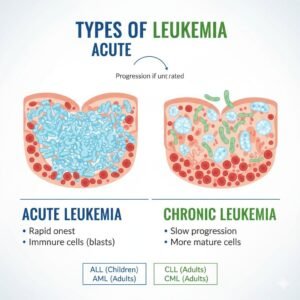
- Acute Leukemia – progresses rapidly and requires immediate treatment.
Acute leukemia is a quick-growing blood cancer involving blood cells and bone marrow. Acute leukemia occurs when blood cells become blasts that do not function properly. The blasts grow and multiply and fll a lot of the should-be normal cells and especially the red blood cells or the blood platelets, so, of course, the person would have all sorts of problems. The significant problems will be your immunity (or running the risk of always being sick), anemia, and your blood will not clot, and you will bruise more easily. Those affected with leukemia do not have functioning white blood cells. Their immune systems are compromised, and they suffer consequences from the surplus of immature white blood cells within the marrow and blood. Normal blood cells (such as red blood cells and platelets) are then crowded out and eventually cease to exist. Because acute leukemia is fast fast-moving disease means that an early diagnosis and early treatment are important and can possibly be lifesaving. Treatment options for acute leukemia are discussed next. The treatment methods will depend on a variety of factors, including age, type of leukemia, and how serious the disease appears to be at the time of diagnosis. The treatment options include chemotherapy agents, targeted therapy agents, radiation therapy, and a possible stem cell transplant.
-
Chronic Leukemia – progresses slowly, may not cause symptoms at first.
Chronic leukaemia is a slow-growing blood cancer that involves the bone marrow and blood. In contrast to its acute counterpart, chronic leukaemia develops gradually, making it possible for the patient not to notice anything obviously concerning for quite some time, particularly during the early stages of the disease.
Most patients can survive for years with chronic leukemia because most do not need treatment. The majority of patients are put on some type of maintenance therapy with medications or targeted radiation, as well as some patients require stem cell transplants at some point for treatment.
Causes and Risk Factors.
Leukemia has an unknown cause, but is generally correlated and associated with changes (mutations) to the DNA of blood-forming cells in bone marrow. These mutations lead to the development of abnormal white blood cells that multiply uncontrollably and crowd out healthy cells. Many times, leukemia is due to a combination of risk factors that increase the risk of someone developing leukemia. They can experience: extensive exposure to high levels of radiation or exposure to hazardous chemicals (like benzene), the effects of cancer treatment (like chemotherapy or radiotherapy), and so forth, and people with genetic disorders (like Down syndrome). Additionally, a weakened immune system, family history of leukemia, and older age can also contribute to risk factors for leukemia. Although not all individuals with risk factors will develop leukemia, it is likely that their bodies may be predisposed to the disease.
- Genetic mutation in bone marrow cells.
- Radiation exposure and certain chemicals.
- Family history of leukemia.
- Certain genetic disorders, like Down syndrome.
Symptoms.
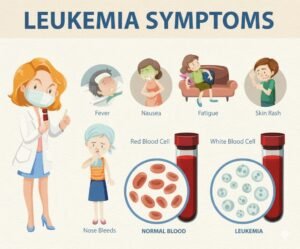
The signs of leukemia may gradually appear and will be different for each person and depend on an acute or chronic disease, but normally present symptoms will be associated with a decrease in healthy blood cells, some of the common symptoms include fatigue, weakness, and fever. This is due to abnormal white blood cells, which lead to frequent infections or sometimes night sweats. If you don’t have enough red blood cells, you can develop anemia. Most of these signs and symptoms may be vague and similar to other medical conditions; therefore, leukemia is often diagnosed late without medical tests or exams.
- Frequent infections due to weak immunity.
- Excessive bruising or bleeding.
- Fatigue and weakness.
- Bone pain or tenderness.
- Swollen lymph nodes, liver, or spleen.
Diagnosis.
When diagnosing leukemia, a doctor will do a complete physical examination that includes blood analysis and some level of bone marrow assessment. Generally, if a doctor believes leukemia is a possibility, they will start with a complete blood count (CBC), which will typically reveal some abnormal increase of white cells with a corresponding low number of red blood cells and platelets. After completing the blood tests, a doctor will complete a bone marrow aspiration and a biopsy. This is when a small amount of bone marrow is taken and looked for leukemia cells. Then, further tests such as cytogenetic analysis, flow cytometry, and molecular testing will be performed on the bone marrow to see if they can identify specific gene changes and, more importantly, the type of leukemia they are looking at. Recently, some doctors are also utilizing imaging tests such as imaging tests including X-rays, CT scans, or ultrasounds, which they may add to examine to detect organ enlargement or to keep an eye on potential complications. It is best to make an early and accurate diagnosis to decide the most effective treatment plan.
- Physical examination for swollen nodes or spleen.
- Blood test to check abnormal white blood cell counts.
- Bone marrow biopsy for confirmation.
- Imaging test if needed.
- Genetic and molecular testing.
Treatment.
The treatment of leukemia depends on its type (acute or chronic) and severity, as well as the patient’s age and overall health.
- Chemotherapy is – main treatment for leukemia.
- Radiation therapy is specific cases.
- Targeted therapy to block cancer growth.
- Bone marrow or stem cell transplant.
- Immunotherapy to boost the body’s defense.
With advances in modern medicine, many forms of leukemia can now be managed effectively, and some patients achieve long-term remission.
Conclusion.
- Leukemia is a serious but treatable blood cancer.
- Early detection improves survival rates.
- Advances in therapy have improved outcomes.
- Regular medical check-ups are important.


