

Introduction.
The immune system is the body’s defense network that protects against dangerous invaders, such as bacteria, viruses, fungi, and abnormal cells (like cancer). It’s made up of cells, tissues, organs, and molecules that work together to fight and exclude pathogens while distinguishing them from the body’s own healthy cells.
Types of Immunity.
There are two types of the Immune system:
- Adaptive Immunity (specific, acquired).
- Innate Immunity (non-specific, first line of defense).
1. Adaptive Immunity (specific, acquired)
Adaptive immunity is that part of the immune system that has developed in response to previous exposure to a specific pathogen or antigen. * In contrast to the innate immune responses (which provide non-specific and rapid adaptive defense), adaptive immune responses are highly specific and take time to develop on the first exposure, but provide long-lasting protective immunity based on memory cells.
B Cells.
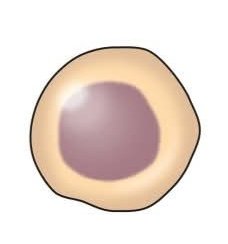
- Responds to estradiol (E2), androgens, response to progestrone unknown/not responsive.
- Broader and more effective antibody response in females.
- Comparable numbers and activity in males and females.
Conventional CD4 T cells.
- Respond to estradiol (E2), progesterone, and androgens.
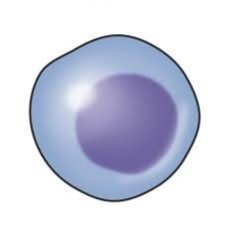
© 2025 GetScienceMe – Original image. All rights reserved. - Higher number and activation in females; higher CD4/CD8 ratio in females.
- Recognize antigens presented on MHC class II molecules by antigen-presenting cells (APCs: dendritic cells, macrophages, B cells).
- Require costimulatory signals (e.g., CD28-B7 interaction) for full activation.
Cd8 T cells.
- Respond to estradiol (E2), progesterone, and androgens.
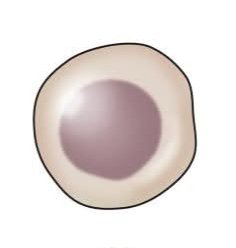
© 2025 GetScienceMe – Original image. All rights reserved. - Males trend toward exhaustion, females trend towards activation.
- Higher numbers and activation in females.
- Destroy virus-infected cells.
- Kill cancer cells before they spread.
- Attack transplanted tissue cells (graft rejection).
Treg Cells.
- Respond to estradiol (E2), progesterone, and androgens.
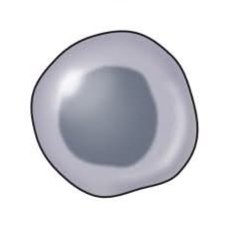
© 2025 GetScienceMe – Original image. All rights reserved. - Hugher number and more robust responses in males.
- Prevent autoimmunity: Stop the immune system from attacking the body’s own cells.
- Suppress excessive immune responses: Protect tissues from damage during infection or inflammation.
- Maintain tolerance: Allow harmless substances (e.g., food antigens, beneficial gut bacteria) without triggering immunity.
2. Innate Immune System.
The innate immune system serves as the body‘s primary defense against infections. This type of immunity is referred to as non-specific because it reacts the same to all pathogens and provides immediate, yet short-term protection. The innate immune system does not have the ability to generate memory like adaptive immunity does.
Neutrophils.
- Neutrophils respond to estradiol (E2), progesterone, and androgens.
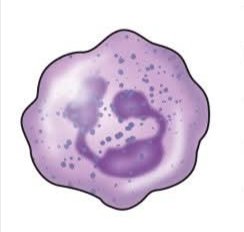
© 2025 GetScienceMe – Original image. All rights reserved. - Female sex hormones promote survival and effector function.
- Females have a higher abundance of neutrophils and phagocytic activity.
- Phagocytosis is the process of enclosing and digesting pathogens including bacteria, fungi, and dying/dead tissue.
- Degranulation is the process of neutrophils releasing antimicrobial agents (enzymes, defensins, myeloperoxidase) to kill pathogens.
- Respiratory Burst is the process where neutrophils produce reactive oxygen species (ROS) to kill microbes.
Monocytes and macrophages.
- Respond to estradiol (E2), progesterone, and androgens.
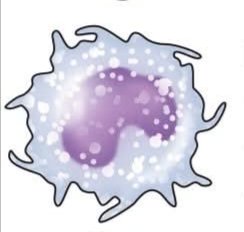
© 2025 GetScienceMe – Original image. All rights reserved. - Greater activation and phagocytic activity in females.
- Higher proinflammatory cytokine production in males.
- Monocytes are a type of white blood cell that circulates in the bloodstream.
- Macrophages are Long-lived phagocytic cells that develop from monocytes after they enter tissues.
- Macrophages engulf and destroy bacteria, fungi, parasites, and debris.
Dendritic Cells.
- Respond to estradiol (E2), progesterone, and androgens.
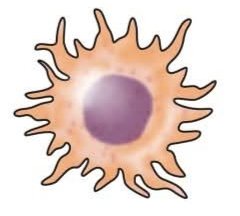
© 2025 GetScienceMe – Original image. All rights reserved. - Higher pDC responses in female activating T cells.
- Sex-specific number varities in some tissues.
- Detect and engulf pathogens, toxins, or dying cells in peripheral tissues.
- Break down pathogens into fragments (antigens).
- Travel to lymph nodes and present antigens to naïve T cells.
Eosinophils.
- Respond to estradiol (E2), progesterone, and androgens.
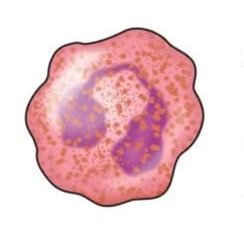
© 2025 GetScienceMe – Original image. All rights reserved. - Male dominance in eosinophilic diseases.
- Higher blood count in males, but variable tissue responses.
- Defense Against Parasites (Helminths, Protozoa).
- Release toxic proteins (e.g., major basic protein, eosinophil peroxidase) that damage parasite membranes.
- Secretes cytokines and growth factors that modulate immune responses.
NK cells.
- Respond to estrogen (E2), progestron, and androgens, unknown or not responsive.
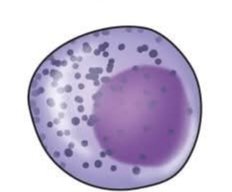
© 2025 GetScienceMe – Original image. All rights reserved. - Sex and tissue-specific variation in number and activity.
- Cytotoxic Killing of Infected or Tumor Cells
- Use perforin (which forms pores) and granzymes (which induce apoptosis) to destroy target cells.
- Continuously patrol the body to identify abnormal or stressed cells.
- Detect cells with low MHC-I expression (common in virus-infected or cancer cells).
Role of the Immune System.
- Defense against pathogens → prevents infections.
- Immune surveillance → detects and destroys cancerous or abnormal cells.
- Homeostasis → removes dead or damaged cells.
- Tolerance → distinguishes between “self” and “non-self” to avoid attacking own tissues.
Functions of the Immune System
Recognition
- Identifies pathogens, toxins, and abnormal cells using receptors.
Response
- Innate response: immediate, non-specific (inflammation, phagocytosis).
- Adaptive response: delayed but highly specific (antibody production, T cell activation).
Memory
- Adaptive immunity retains a “memory” of past infections for faster future responses.
Regulation
- Maintains balance: prevents overreaction (autoimmunity) or underreaction (immunodeficiency).


