Introduction.
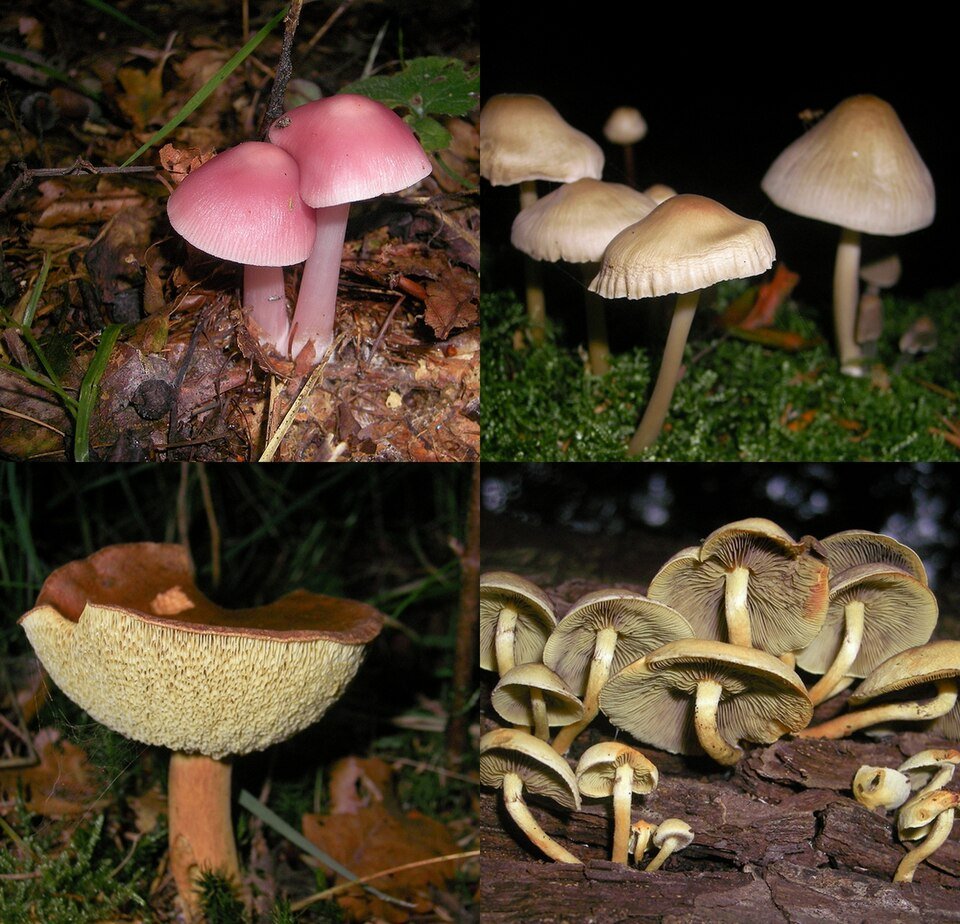
Fungi are a large group of eukaryotic organisms that include molds, yeasts, and mushrooms. They are related to plants, animals, and bacteria. Fungi lack chlorophyll, so they cannot make their own food through photosynthesis; they obtain nutrients by decomposing organic matter or forming symbiotic relationships with plants and other organisms.
Structure of Fungi.
Most fungi (except yeasts) are multicellular and made up of thread-like filaments.
1. Hyphae
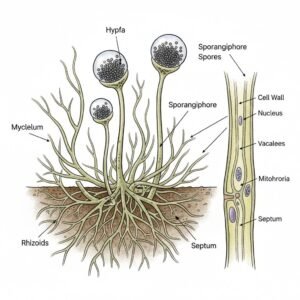
Hyphae are filamentous structures, thread-like filaments that make up fungal structure.. They grow by elongating at the tip and by branching into a tangled mass, known as mycelium, which is the body of the fungus. Each hypha is tubular with a cell wall made of a stiffened material, primarily chitin, which is strong and yet flexible. Some hyphae have partitions called septa, creating compartments and hyphae that are septate. Other hyphae are considered coenocytic or aseptate because they have no septa and look non-compartmentalized. They absorb nutrients through the secretion of enzymes that degrade complex organic material into its simplest components for digestion and absorption. They can even help with reproduction by forming specialized hyphae that develop reproductive structures, such as spores.
- Thin, thread-like filaments that make up the body of fungi.
- It can be septate (with cross-walls called septa) or coenocytic (without septa).
- Function: absorb nutrients from the environment.
2. Mycelium
Mycelium is the part of a fungus that a person sees, consisting of a vast network of thin threads known as hyphae. The main body of the fungus, mycelium, is normally found hidden deep in the ground, in decaying wood or other dead organic systems. The mycelium serves as the “root structure” of the fungus, spreading extensively in search of nutrients and water to sustain the life of the fungus. The mycelium releases enzymes that break down organic materials that are more complex into simpler materials that can be absorbed and used to allow the fungus to grow and reproduce. It can spread quickly to expand its area to take in more nutrients and water, forming dense “mats” of mycelium that assists in the decay of once-living plants or animals
- A network of hyphae forms the main body of the fungus.
- Found in soil, wood, or other substrates.
- Function: increases surface area for absorption of nutrients.
3. Cell Wall
- Made of chitin (not cellulose like plants).
- Provides rigidity and protection.
4. Spores
- Reproductive structures (asexual or sexual).
- Produced in specialized organs such as sporangia, asci, or basidia.
- Function: dispersal and survival in harsh conditions.
5. Fruiting Body (Sporophore)
- The visible part (like a mushroom) that produces and releases spores.
- Example: the cap and stalk of a mushroom.
6. Cytoplasm & Organelles
- Hyphae are eukaryotic, containing a nucleus, mitochondria, vacuoles, endoplasmic reticulum, and ribosomes.
Characteristics of Fungi.
- Eukaryotic (have a true nucleus).
- Cell wall made of chitin (not cellulose like plants).
- Fungi do not have chlorophyll
- Heterotrophic (depend on other organisms for food).
- Reproduce by spores (asexually or sexually).
- Can be unicellular (yeasts) or multicellular (mushrooms, molds).
- Their storage food material is glycogen and oil droplets, like animals.
- The mode of nutrition is absorbative
Types of Fungi.
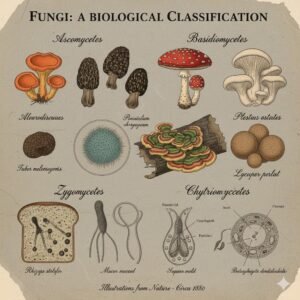
1. Zygomycota (Zygomycetes)
- Mostly molds, like Rhizopus (bread mold).
- They form zygospores during sexual reproduction.
- Commonly found on decaying food and organic matter.
2. Ascomycota (Sac Fungi)
- Called sac fungi because they produce spores in a sac-like structure (ascus).
- Examples: Yeast (Saccharomyces), Morels, Truffles.
- Includes beneficial fungi (fermentation) and plant pathogens.
3. Basidiomycota (Club Fungi)
- Known as club fungi because spores form on a club-shaped structure (basidium).
- Examples: Mushrooms, Puffballs, Rusts, Smuts.
- Many edible mushrooms belong here.
4. Chytridiomycota (Chytrids)
- Simplest and oldest group of fungi.
- Mostly aquatic fungi with motile spores (have flagella).
- Some are parasites of plants, algae, and amphibians.
5. Glomeromycota
- Form mycorrhizal associations with plant roots.
- Help plants absorb water and nutrients (especially phosphorus).
- Essential for plant growth and soil fertility.
Importance of Fungi
- Decomposers: recycle nutrients in ecosystems.
- Food & Industry: used in bread, beer, cheese, and antibiotics (like penicillin).
- Medicine: source of drugs and research tools.
- Pathogens: some cause diseases in plants (rusts, smuts) and humans (ringworm, candidiasis).
- Fungi play an important role in biotechnology for the production of enzymes.
- Fungi are the main source of food, but not all species.
- Some fungi are used in agriculture; they provide nutrients for plant growth.
- Fungi play an important role in the nutrient cycle.