
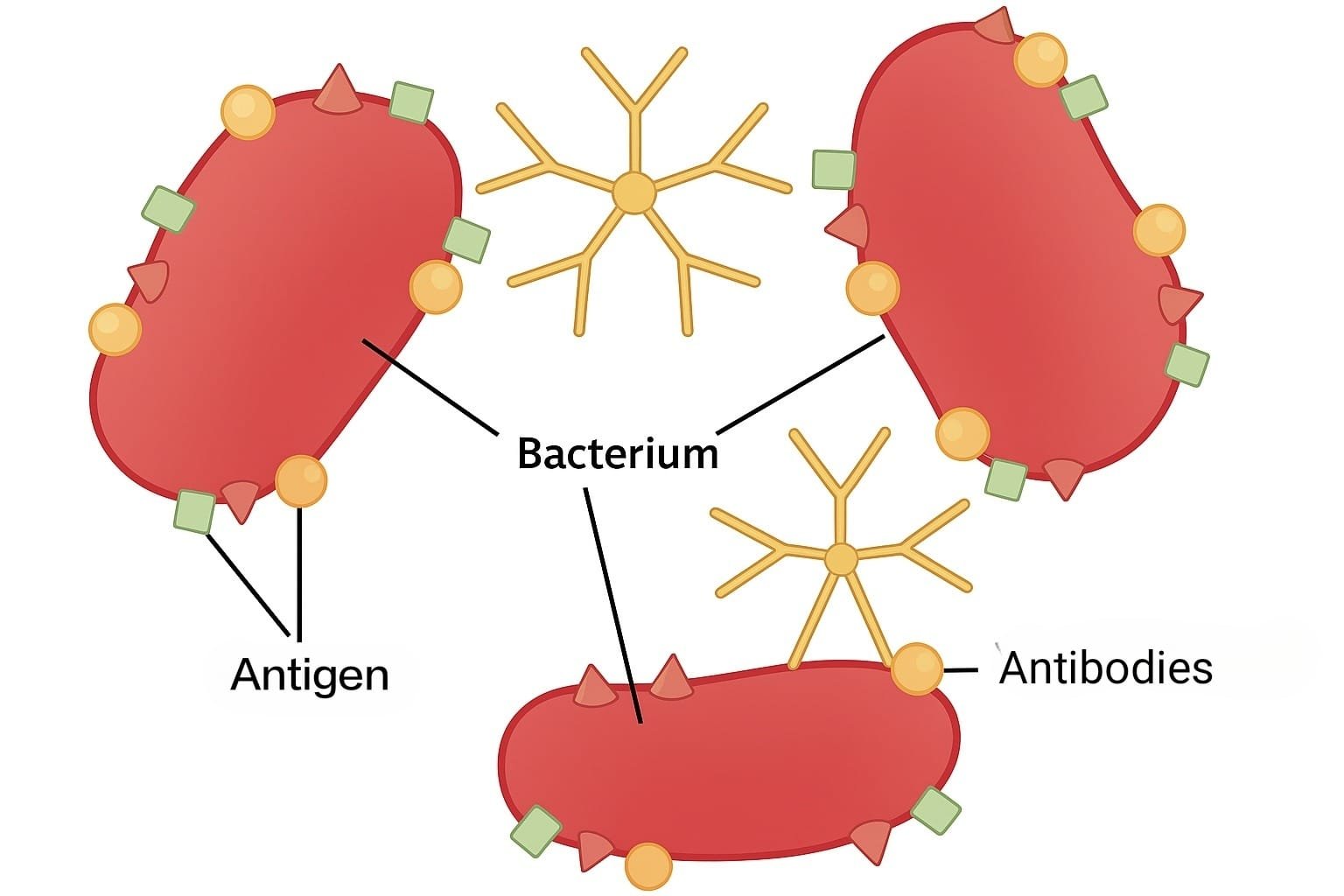
What is an Antigen?
- An antigen is any substance that the immune system can recognize as foreign (non-self) and trigger an immune response.
- Usually, antigens are proteins or polysaccharides found on the surface of pathogens like bacteria, viruses, fungi, or even on foreign cells or toxins.
- The immune system recognizes antigens through specialized receptors on immune cells, prompting a defense response.
- Usually, a foreign molecule such as a protein, polysaccharide, or toxin.
Types of Antigens.
There are four types of Antigens.
Exogenous Antigens
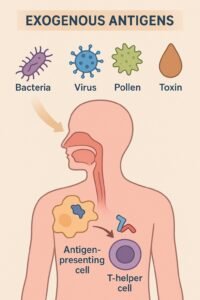
APCs (Antigen-presenting cells) incorporate and break down the foreign particles into smaller particle antigens. Once broken down, the small pieces of antigen are presented on the cell surface with Major Histocompatibility Complex (MHC) class II. Once the antigen is presented,- MHC-peptide antigen is recognized by the T helper cells (CD4+T naive helper cells), which are the nucleus of the immune response to whichever antigen has been presented. Activation occurs in T helper cells, which release cytokines to stimulate the B cells to produce specific antibodies for the antigen. The antibodies will neutralize and help eliminate the pathogen from the body. Exogenous antigens are significant because they allow the body to produce memory cells for similar antigens in the past. Overall, exogenous antigens are the first line of challenges to the immune system for sustaining effectiveness in the defense from harmful external identifiers due to recognition. a specific amino acid
- Origin: Outside the body (e.g., bacteria, viruses, pollen).
- Enter the body through inhalation, ingestion, or wounds.
Endogenous Antigens
Endogenous antigens are produced from the body’s own cells rather than arriving from an external source. The cytotoxic T cells recognize that the host cell is abnormal/infected with a microorganism and destroy the host cell, in order to contain the infection to this one host cell.
- Produced within the body, usually by infected or abnormal cells (e.g., viral proteins inside infected cells or tumor
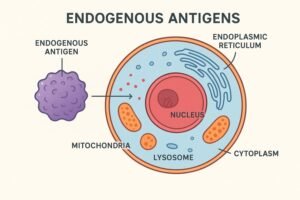
Original AI-generated illustration by GetScienceMe – © 2025 antigens).
- Presented on the surface of cells via MHC I molecules.
Endogenous antigens can also include tumor-associated antigens that are produced when normal cells undergo mutations to cancer cells. In some cases, the immune system may also recognize cellular components, which are immune targets as endogenous antigens, leading to an autoimmune disease. Overall, endogenous antigens are important for ensuring that internal danger signals identified by the immune system are activated, so that infected or damaged cells can be identified and destroyed for the cellular health of the body, and ensuring the immune system determining whether a cell is normal or abnormal.
Autoantigens
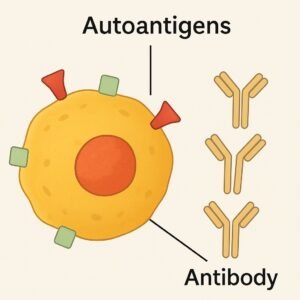
Autoantigens are molecules or proteins produced by the body that are erroneously perceived as foreign by the immune system.
This results in an autoimmune response. The immune system is normally able to distinguish “self” from “non-self” substances, causing self-tolerance. However, when self-tolerance fails, the immune system begins to attack the body’s own tissues as if they were harmful invaders.
- Normal body molecules are mistakenly recognized as foreign by the immune system (in autoimmune diseases).
Haptens
- Small molecules that are not immunogenic by themselves but can become antigens when attached to a larger carrier molecule.
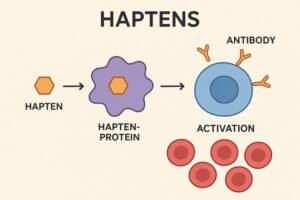
Original AI-generated illustration by GetScienceMe – © 2025
The carrier provides sufficient molecular size and complexity for recognition by the immune system, whereas the hapten determines the specificity of the immune response. Once a hapten-carrier complex becomes stable, it can be recognized by the immune system, which can then regard the hapten as part of a foreign structure and generate specific antibodies against it.
Drug haptens are commonly recognized as certain medications (such as penicillin), urushiol (the oily toxin from poison ivy), or as constituents of certain chemical dyes. When penicillin binds to proteins in the blood, for example, it gives rise to an entirely new antigenic structure that subsequently sensitizes an individual and can elicit an allergic response. Once the immune system has been sensitized to a hapten, the immune system can cause a response to the hapten on its own, with an example of this occurring in allergic reactions. Haptens can be valuable in immunology and medical research because they can help scientists understand the nature of immune recognition. Haptens are often used in developmental diagnostic tests for various diseases or to study drug allergy phenomena (e.g., penicillin)
Role in the Immune System.
- Trigger Immune Response: Antigens stimulate the immune system to produce antibodies or activate T-cells.
- Recognition: Help immune cells distinguish between self and non-self.
- Memory Formation: When the immune system encounters an antigen, it creates memory cells for faster response upon future exposure.
- Activation of Immune Cells: Different antigens activate different branches of the immune system:
- B-cells produce antibodies against extracellular antigens.
- T-cells respond to infected cells presenting endogenous antigens.
Examples of Antigens.
- Bacterial antigens: Lipopolysaccharides (LPS) on Gram-negative bacteria.
- Viral antigens: Spike protein of the coronavirus (SARS-CoV-2).
- Allergens: Pollen grains, dust mites.
- Toxins: Tetanus toxin produced by Clostridium tetani.
- Blood group antigens A, B, AB, and O.