What is the Liver?
- The liver is the largest gland of the body, weighing almost 1.5 kg. Present just below the
diaphragm. - The liver directly affects digestion by producing bile from hepatocytes.
- Bile helps the digestion of fat by emulsifying, absorbing and absorbing fats.
- Bile contains alkalizing materials, which neutralize the acid present in the chime entering
into the duodenum. - Kupffer cells present in the liver phagocytose the possible pathogens being transferred
through portal circulation. - All nutrients and chemicals brought through portal circulation to the liver are processed
and filtered here before further addition to the generalized circulation. - Bile filters out toxins materials and waste materials, including drugs and alcohol.
- The liver synthesizes albumin and anticoagulants.
- The liver converts very harmful ammonia (produced during protein metabolism) into less
harmful urea. - The liver stores carbohydrates by converting them into glycogen.
- The liver produces cholesterol required for making cells, enzymes, and vitamins.
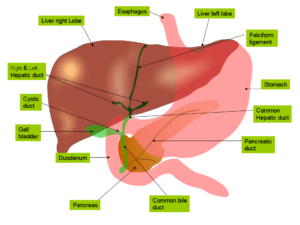
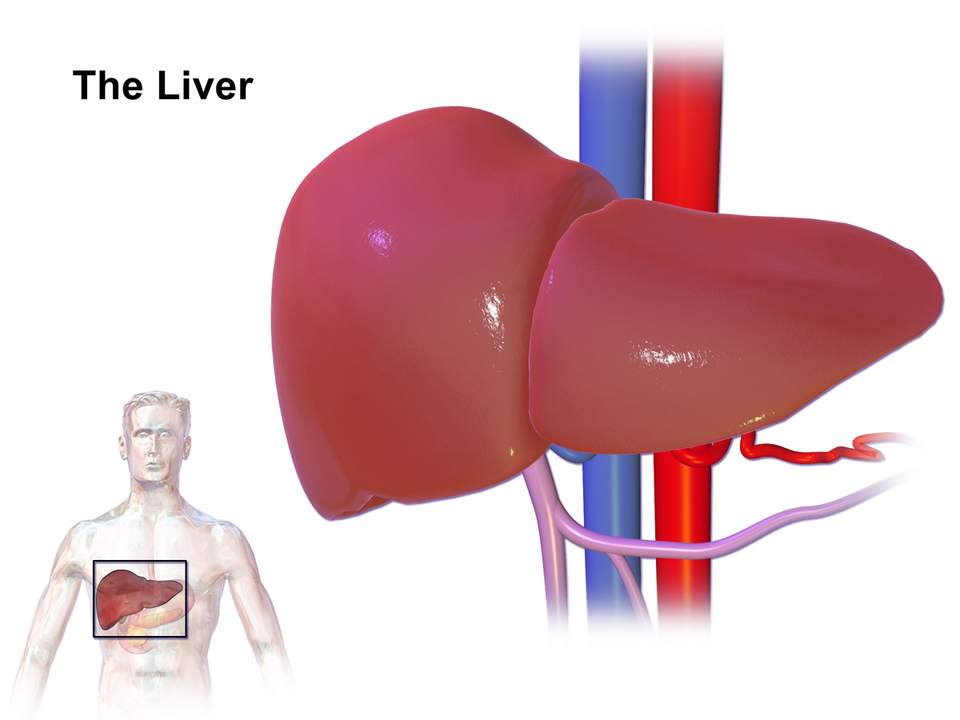
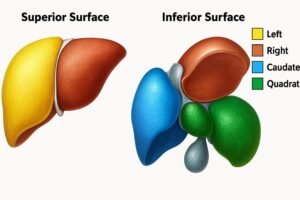
Lobes of the Liver:
Right Lobe (largest lobe)
There is the largest lobe of the liver, its located near the upper right portion of the abdominal cavity. Its large size plays an important role in the function of the liver, including metabolism, detoxification, protein synthesis, and bile production. It is supplied primarily by the portal vein and the right branch of the hepatic artery, which provide nutrient-rich and oxygen-rich blood, allowing the lobe to process and filter substances absorbed from the digestive tract. When blood passes through the portal vein and hepatic artery, it carries nutrient-rich and oxygenated blood. This lobe filters the substances which absorbed in the intestinal tract. The bile is drained by the bile duct toward the gallbladder and intestine.
Left Lobe ( smallest lobe).
The left lobe of the liver is smaller than the right lobe. The left lobe receives blood from the left branch of the portal vein and the left hepatic artery, allowing it to carry out normal functions like metabolism, protein synthesis, and detoxification. The left lobe also comes with important bile duct structures to assist in moving bile to the gallbladder and intestines, to help with digestion. The left and right lobes sit separated by the falciform ligament. In addition to being physically smaller, the left lobe is also vital for contributing to the liver tissues for liver regeneration when the liver heals after an injury or disease. Although there are not a ton of possible origins, understanding one’s anatomical orientation and any possible variations is significant for surgeries and imaging studies to assist in diagnosing diseases of the liver. Ultimately, the left lobe represents a significant portion of the liver and is important for the health of this organ.
Caudate lobe
- Quadrate lobe
They are small and located under the side of the liver. functionally important to the metabolic, detoxification, bile-secreting, and nutrient-processing functions of the liver. From an anatomical angle, it qualifies as a subdivision of the right lobe; however, its location and anatomy often allows it to have the appearance of a separate lobe. functionally important to the metabolic, detoxification, bile-secreting, and nutrient-processing functions of the liver. From an anatomical angle, it qualifies as a subdivision of the right lobe; however, its location and anatomy often allow it to have the appearance of a separate lobe. In addition, this lobe is near by the gallbladder, which emphasizes the aspect of bile production and storage, as bile secreted from the quadrate lobe can directly modulate gallbladder function.
Contents of the Bile.
Chief components of bile are bile salts are :
- Water (97.5%)
- Bilirubin
- Bile salts
- Cholesterol
- Phospholipids.
- Electrolytes
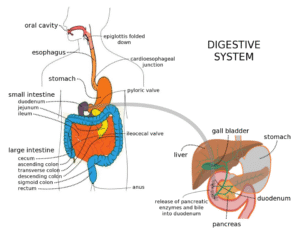
Function of the Liver.
- Produces bile
- Utilizes fat stored in the cells
- Neutralizes harmful chemicals produced in the body
- Prepares vital vitamin A & K
- Maintains and regulates the metabolism of the body.
- Synthesizes plasma proteins.
- Converts glucose into glycogen and stores it
- Produces clotting factors (Prothrombin & Fibrinogen)
- Prepares Heparin & antibodies.
- Synthesizes antibodies and enzymes.