Pituitary Gland.
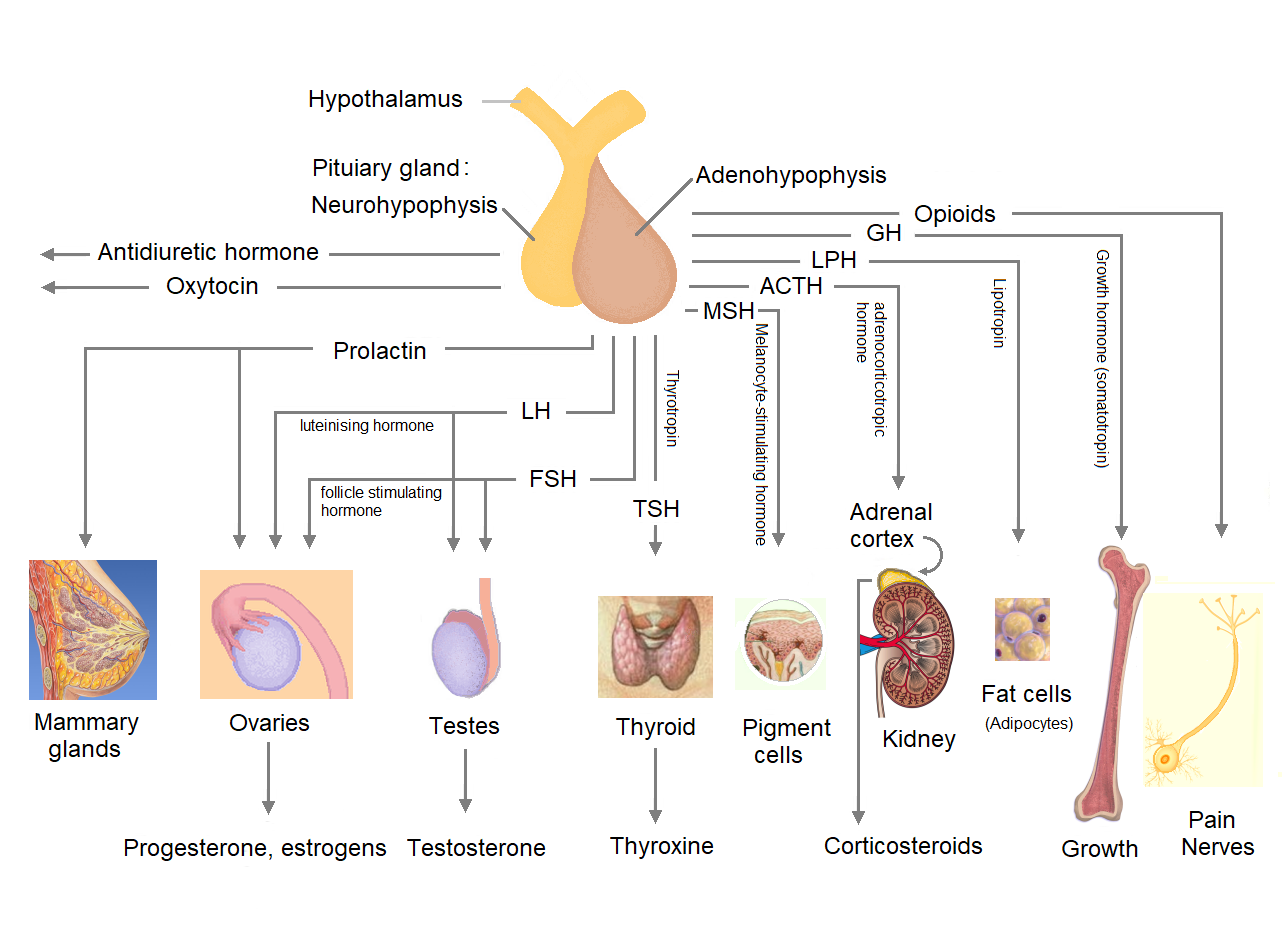
This pea-sized gland is connected to the hypothalamus of the brain. Several hormones of the pituitary called trophic hormones, affect the secretion of other endocrine glands, so some of the hormones of this gland directly affect different parts of the body. The pituitary gland is the endocrine gland they located at the base of the brain. The pituitary gland has two major parts. Anterior lobe (adenohypophysis) and Posterior lobe (neurohypophysis).
List of Pituitary Gland Hormones.
Anterior lobe (adenohypophysis)
- PRL (Prolactin)
- ACTH (Adrenocorticotropic Hormone)
- FSH (Follicle-Stimulating Hormone)
- LH (Luteinizing Hormone)
- TSH (Thyroid Stimulating Hormone)
- MSH (Melanocyte Stimulating Hormone)
- GH (Growth Hormone)
Posterior lobe (neurohypophysis)
- ADH (Antidiuretic Hormone)
- Oxytocin Hormone
1. PRL (Prolectin).
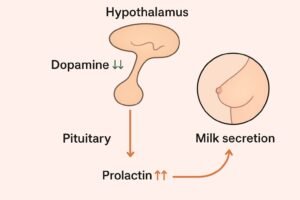
Prolactin Hormone is secreted by the anterior pituitary gland. These are the types of peptide hormones. They are produced by the lactotroph cells. In human prolectin single chain consists of a polypeptide of 199 amino acids. The main function of this hormone is to stimulate the memory glands to produce milk after childbirth birth In breast development, they work with estrogen and progesterone during pregnancy to prepare breasts for secretion and are stimulated by suckling. Prolectin also play a role in metabolism, water/salt balance, and influence the immune cell growth and function.
2. ACTH (Aderenocorticotropic Hormone).
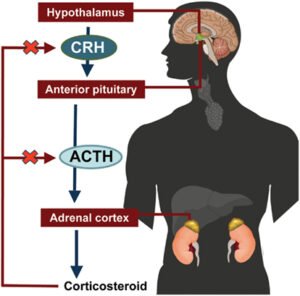
ACTH, also called Corticotropin, they secreted by the anterior pituitary gland. They are made by the corticotroph cells. In humans, their structure is a single chain of polypeptide of 39 amino acids, they released when the CRH (corticotropin-releasing Hormone) response from the hypothalamus. ACTH is the main stimulator of the adrenal cortex, especially the zona reticularis and zona fasciculata. The adrenal cortex produces glucocorticoids, mainly cortisol. The main function of ACTH is the stress release response. They prepare the body for ” fight or flight” by providing energy and maintaining internal function. In metabolism, they increase gluconeogenesis in the liver and fat for energy and break down protein for glucose production. ACTH maintains the blood pressure by enhancing the blood vessels.
3. FSH (Follicle-Stimulating Hormone).
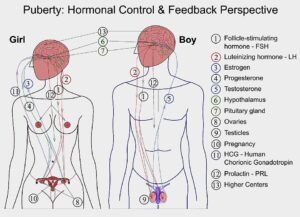
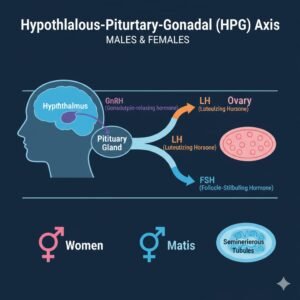
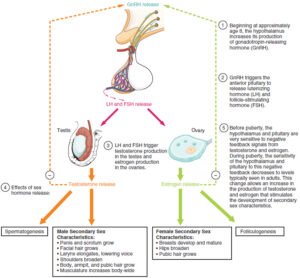
FSH is a hormone secreted by the pituitary gland. It plays a major role in the reproductive process in both males and females. They are stimulated by the GnRH (gonadotropin-releasing hormone) from the hypothalamus. FSH is a type of glycoprotein hormone. They are produced by the gonadotroph cells.
In Female. FSH stimulates the growth of the ovarian follicles (eggs) during the menstrual cycle. In the mid-cycle of the menstrual cycle, they support estrogen synthesis in granulosa cells in the ovaries. A high level of FSH indicates ovarian failure, while a low level of FSH indicates pituitary dysfunction.
In Male. Sertoli cells in seminiferous tubules stimulate spermatogenesis to produce sperm and promote the production of androgen-binding protein(ABP) to maintain high local testosterone. increase nutrilization and structural support to developing sperm cells.
4. LH (Luteinizing Hormone).
LH is a hormone secreted by the anterior pituitary gland. They are the type of glycoprotein hormone produced by the gonadotroph cells. LH hormone is involved in both male and female reproductive systems and fertility.
In Female. LH surge triggers ovulation in the mid-cycle of the menstrual cycle for the release of an egg from the ovary. In post-ovulation, they stimulate the formation of the corpus luteum from ruptured follicles. In the luteal phase corpus luteum secretes progesterone to prepare the uterus for implantation.
In Male. LH hormone stimulates Leydig cells in the testes for the production of testosterone, which supports spermatogenesis (production of sperm) and secondary characteristics like muscle mass and body hair.
5. TSH (Thyroid-stimulating hormone).
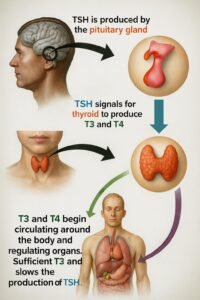
TSH is also called Thyrotropin. They are secreted by the anterior pituitary glands in the brain, and they target the thyroid gland in the neck. The thyroid gland produces thyroxin (T4) and triiodothyronine (T3). These hormones regulate the metabolism, energy level, growth, and temperature. The thyroxin hormone requires iodine for its production. If a person lacks iodine in their diet, the thyroid gland cannot make its hormone. Both of these, Thyroxin (T4) and Triiodothyroxin (T3) increase the basal metabolic rate (BMR) how the body burns calories at rest, and they boost oxygen consumption by cells and also speed up the breakdown of carbohydrates, fats, and protein for energy. They are essential for the normal growth of bone in children, and they help maintain heat production and a stable body temperature.
6. MSH (Melanocyte-Stimulating Hormone)
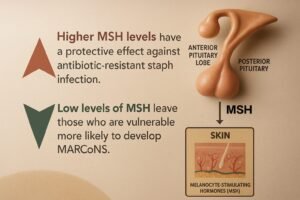
MSH hormone is produced by the intermediate lobe of the pituitary gland in humans. There are three types of MSH:
- Alpha-MSH is the most common regulator of pigments.
- Beta-MSH is the pigment effect in energy metabolism.
- Gamma-MSH regulates blood pressure and sodium balance..
MSH performs many functions. In the skin, they stimulate melanocytes to produce melanin for skin pigment, hair, and eye color. When MSH produces more melanin skin tone becomes darker. Melanin absorbs and scatters UV light, protecting the skin cells.
7. GH ( Growth Hormone).
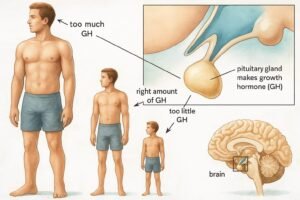
GH hormone is also called Somatotropin. GH promotes the growth of the body. If the production of this hormone is stopped during the growing age, the result decrease the growth. This condition is called Dwarfism. If this hormone is excessively produced during the growing age, this condition is called Gigantism. If somatotropin is continuously produced after growing age, internal organs and body extremities grow large. This condition is known as Acromegaly, such a person will grow have large hands, feet, and jawbone.
Posterior Lobe ( neurohypophysis)
1. ADH (Antidiuretic Hormone).
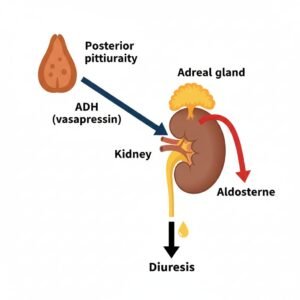
- ADH is also called Vasopressin. It is a hormone produced in the hypothalamus and released from the posterior pituitary gland. ADH regulates the water balance in the body and also controls how much water is reabsorbed in the kidneys. If ADH level is high kidneys reabsorb more water in the urine, and the body loses less water. When the ADH level drops kidneys reabsorb less water in the urine, and the body loses more water.
- ADH is the water saver in the kidney. Its main target collecting duct in the kidney nephron the ADH level balances the water level in the kidney.
- ADH increases blood pressure by the contraction of the blood vessels when its concentration is higher.
- If ADH is too little causes dehydration (diabetes insipidus).
- If ADH is too much cause water overload (SIADH).
2. Oxytocin Hormone.
The Oxytocin hormone is also called the Love Hormone because of its strong role in bonding, affection, trust, and emotional connection. They are produced by the hypothalamus and released by the posterior pituitary gland. They are the peptide hormones that consist of an amino acid (nanopeptide). They work with both males and females.
In females, it plays a major role in childbirth and lactation. During pregnancy, labor straining occurs when the oxytocin hormone is released. They experience powerful uterine contractions until delivery. After birth, nipple stimulation during breastfeeding signals to the hypothelemus to release oxytocin. They contract the myoepithelial cell in the memory gland and eject milk, down is called the milk let-down reflex. They also play a role in reproduction; oxytocin increases maternal bonding, emotion, closeness, and stress reducing.
In males, it plays an important role in male reproductive and emotional function. It stimulates smooth muscle contraction of the Vas deferens and epididymis during sperm ejaculation. Oxytocin also enhances sexual arousal, bonding, emotions, and trust in relationships.